









ارسال سریع
هماهنگی اپراتور

محصولات متنوع
پرداخت منعطف

پشتیبانی
خدمات پس از فروش

ارسال روزانه
حتی ایام تعطیل
Product Description
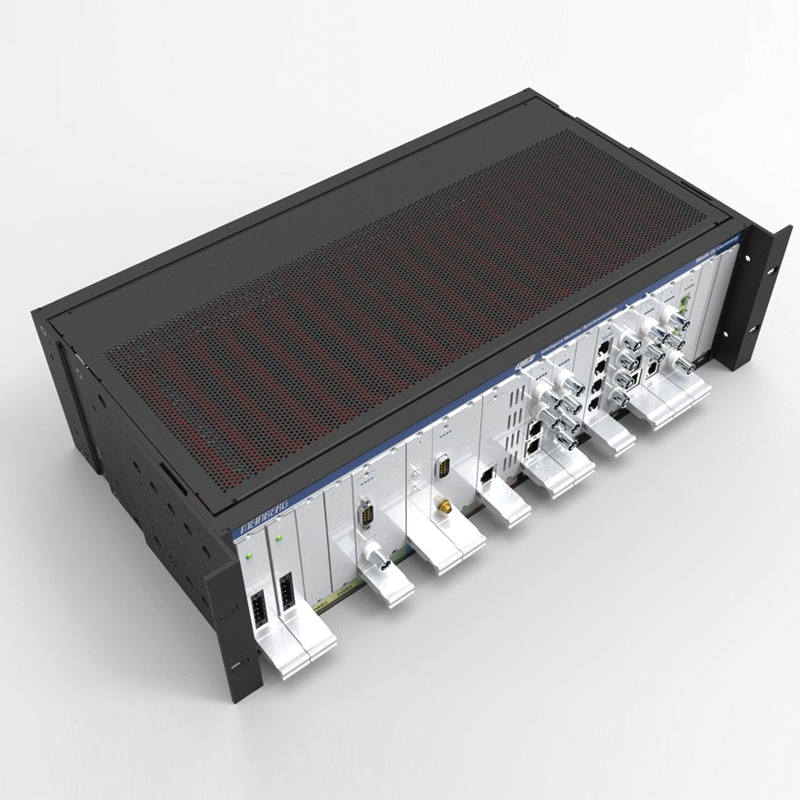
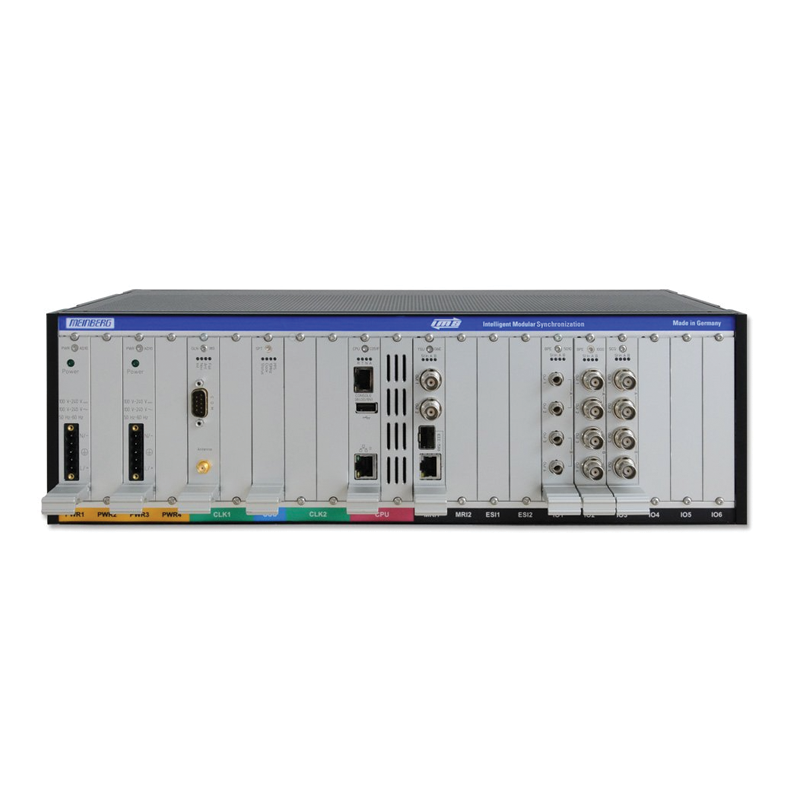
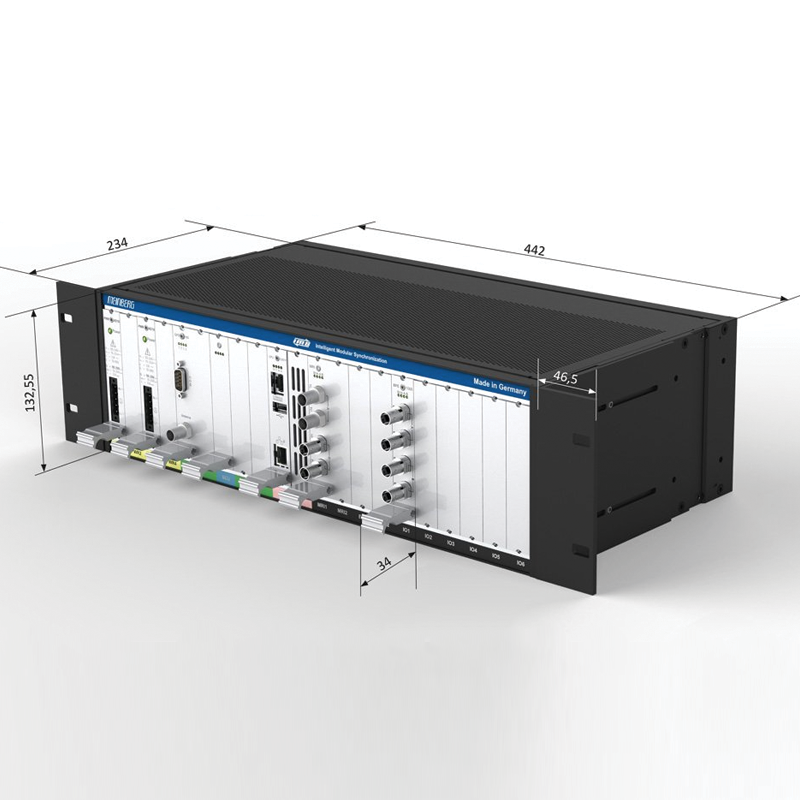
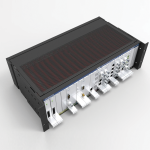
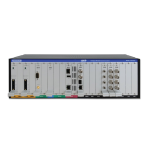
Just like the M3000 standard model, the LANTIME M3000S supports the following slot types:
- IMS-CLK: Up to two reference clock modules (redundant mode)
- IMS-SCU: Accepts an RSC module for redundant operation (two CLK modules installed) or an SPT module for a single CLK configuration
- IMS-PSU:Up to four high efficiency redundant power supplies (AC and DC versions available)
- IMS-CPU: Central processor module providing NTP / SNTP time synchronization as well as remote and local management and configuration interfaces
- IMS-IO: A variety of output signals for all types of synchronization tasks:
electrical and optical pulses, frequencies, time codes and serial time messages as well as additional network interfaces for network synchronization (IEEE-1588, NTP, Synchronous Ethernet) and additional remote management capabilities
High-End NTP Network Time Server for your Network
With up to 25,000 NTP requests per second (depening on the installed CPU module), the system is able to provide time for hundreds and thousands of NTP clients. The LANTIME management CPU module supports the following protocols: NTP / SNTP (v2, v3, v4), HTTP (S), SSH, Telnet, SNMP (v1, v2, v3), FTP, SFTP, DHCP/DHCPv6. For each system, up to 99 logical network interfaces are available (99 IPv4 and 99 IPv6 addresses, each logical interface can be assigned to one VLAN ID). Enterprise-grade features such as IPv6/Dual Stack support, IEEE 802.1Q VLAN support, LACP/high availability bonding as well as DSCP and IEEE802.1p QoS/CoS traffic prioritization ensure that this product can be installed and operated in almost every critical environment: a financial data center; an electrical substation; an NGN telecommunication network; a digital broadcasting infrastructure; air traffic control systems and many many other environments.
Synchronization for 2G / 3G / 4G base stations and LTE Advanced networks.
The PTP implementation supports both ITU-T profiles, ITU-T G.8265.1 for frequency and ITU-T G.8275.1 for frequency and phase. This enables accurate frequency and phase synchronization over packet networks for all network elements that require synchronization, including 2G / 3G / 4G base stations as well as LTE Advanced networks.
Scalable Synchronization Solution
All modules are hot-pluggable and can be configured via a central web interface or a CLI. An almost endless number of combinations of input and output modules handles almost any synchronization task and allows the system to fit into many different roles. The field-upgradeable and therefore highly scalable and flexible IMS concept will grow with your demands. New technologies can be easily integrated into your existing devices as soon as a corresponding module is available, supporting a new connector, signal type or protocol. This protects your investments as it removes the requirement to replace existing devices or add complete new systems when your sync requirements change.
Flexible Synchronization References:
IMS-MRI:Standard reference input cards supporting a number of different input signals like 1PPS, 10MHz, IRIG DCLS, IRIG AM
IMS-ESI: Extended reference inputs for synchronization sources like E1/T1 framed and unframed signals
Both of these slot types can alternatively accept I/O cards and therefore can be used to add output modules or network interfaces, resulting in a maximum of 10 output modules per chassis in combination with the 6 I/O slots.
Due to the hot-plug capabilities of the IMS platform it is possible to add additional modules or replace modules with zero downtime and no negative impact on the system and its modules.
Power supply failures and a large number of additional synchronization related alarms can be communicated using several different protocols, for example mail/SMTP messages, SNMP traps, SYSLOG messages, or alarm relay cards.
IMS Modules

BPE and CPE Modules
Most standard output signals like pulses (1PPS, 1PPM, programmable pulses) and frequencies (10 MHz, 2048 kHz, frequency synthesizer 1 kHz-10 MHz) are provided by two versatile I/O cards named BPE and CPE. Both of these two modules have been designed to cover a wide range of interface and signal/protocol requirements. The BPE modules distribute the signals generated by the reference receiver via the internal backplane to the available physical connections of the board. The modules of the BPE-8000 series also feature an electronic switch which allows the configuration of the output signals via the LANTIME web interface. CPE modules feature a two-tier architecture with a back-end and front-end. The back-end is responsible for internally routing the IMS synchronization signals, provided by the reference clock via the internal backplane. The front-end autonomously generates a wide range of different signals by using an on-board microprocessor and makes a selection of these signals available via physical connectors.
An impressive number of specialized IMS modules covers other application requirements, for example E1/T1 framed/unframed synchronization signals with full SSM/BOC support or low phase noise 10 MHz sine wave frequency outputs. Additional network interfaces for NTP, PTP/IEEE 1588, SyncE and remote management access are available, too.